Testament to its Greatness
Fahreheit 451
Ray Bradbury
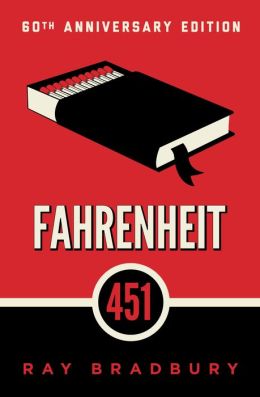
# Pgs: 256
_________________________________________________________________________________
Overview:
Ray Bradbury’s internationally acclaimed novel Fahrenheit 451 is a masterwork of twentieth-century literature set in a bleak, dystopian future.
Guy Montag is a fireman. In his world, where television rules and literature is on the brink of extinction, firemen start fires rather than put them out. His job is to destroy the most illegal of commodities, the printed book, along with the houses in which they are hidden.
Montag never questions the destruction and ruin his actions produce, returning each day to his bland life and wife, Mildred, who spends all day with her television "family." But then he meets an eccentric young neighbor, Clarisse, who introduces him to a past where people didn’t live in fear, and to a present where one sees the world through the ideas in books instead of the mindless chatter of television.
When Mildred attempts suicide, and Clarisse suddenly disappears, Montag begins to question everything he has ever known. He starts hiding books in his home, and when his pilfering is discovered, the fireman has to run for his life.
First published in 1953, Fahrenheit 451 is a classic novel set in the future when books forbidden by a totalitarian regime are burned. The hero, a book burner, suddenly discovers that books are flesh and blood ideas that cry out silently when put to the torch.
_________________________________________________________________________________
Review:
Okay, I just want to say that before we begin, I read this book about two and a half years ago. With that said, I still remember the majority of what happens in this book. Maybe the character names are a little blurry, but everything else is still up there in whatever memory space lazes about in my mind. We should give this book credit just for that: me being able to remember it. I've read some books in the past year, and I've written about them here on my blog, but I can't even begin to remember what they're about. I remember nearly everything about this book.
That done, let's actually talk about the book itself. If from reading the general overview above you still don't have any idea what it's about, then let me try to simplify it. The main character, Guy Montag, is a fireman- he burns books. His society is dystopian, and controlling. It's illegal to own or read books outside of what's allowed (That's one of our freedoms in America, freedom of the press- read and write without, supposedly anyway, any interference from the government; regardless we take it for granted). After having a couple of those "fateful" life situations thrown at him, Montag started to question the things he originally believed. With that, he does something illegal: keeping and reading the books in his home. The rest from there is history.
This book is a lot more interesting than it might sound.
I mean, we in America already take what we have for granted. When reading Ray Bradbury's Fahrenheit 451, all of that reality is just kind of shoved back in your face. In this book, they can't read. And they have about a billion TV's. And the technology is so advanced that it's like, what else are these characters supposed to do but let everything else think for them?
This book is just shocking to read. It's insightful. The symbolism, foreshadowing, and the message that each of these conveys is still very much applicable to today's society. There really isn't any way to go into it without saying that the way Bradbury writes about society is just amazing. It truly is. I mean, the plot isn't action packed and full of wham-bam, mind blown in the car crash that happened somewhere in chapter thirty-three. There's no lusty romance where the main character, Bella Swan (an angsty and overall emotionless character in the movie), will absolutely kill herself over not having the one sparkly vampire as a lover.
Fahrenheit 451 is just heartbreaking once you understand and adjust. Bradbury wrote this book somewhere in the 1980's, and most books nowadays don't write like this. We've adjusted to modern views and the easy stamp out plot that teen fiction books are wont to have. So sometimes reading something like this is confusing, or hard to get into, just because we're so used to reading something easier. We shouldn't kid ourselves, and I'm not going to lie, that's one of the reasons that I read teen fics today (aside from the fact that I am a teen- or is it young adult now?). They're easier than the classics, but that doesn't mean I can't enjoy the classics as much as if not more than today's fics. In Bradbury's case here, it's the message that leaves behind such an impact, and it's the way he portrays these ideas and beliefs. He was completely against development in technology. This is just one such example of these views.
And, in the end, isn't he right?
I think you should read the book and find out that answer for yourself. Find out just what Bradbury is saying, and let me know what you think about technology, or our rights, what we take for granted, what we don't even know we have, whether you agree with the massive event that happens just before the end of the book, whatever. Just let me know what you think. Or just think.
Really, I think this book deserves it.
That said, I'd recommend it to high schoolers and up- so fourteen to eighteen year olds and up. I think that they'd have a likelier chance to understand just what Bradbury's saying. Definitely for lovers of dystopia, sci-fi, symbolism in both the book and with life, and etc. Thanks for reading!
That done, let's actually talk about the book itself. If from reading the general overview above you still don't have any idea what it's about, then let me try to simplify it. The main character, Guy Montag, is a fireman- he burns books. His society is dystopian, and controlling. It's illegal to own or read books outside of what's allowed (That's one of our freedoms in America, freedom of the press- read and write without, supposedly anyway, any interference from the government; regardless we take it for granted). After having a couple of those "fateful" life situations thrown at him, Montag started to question the things he originally believed. With that, he does something illegal: keeping and reading the books in his home. The rest from there is history.
This book is a lot more interesting than it might sound.
I mean, we in America already take what we have for granted. When reading Ray Bradbury's Fahrenheit 451, all of that reality is just kind of shoved back in your face. In this book, they can't read. And they have about a billion TV's. And the technology is so advanced that it's like, what else are these characters supposed to do but let everything else think for them?
This book is just shocking to read. It's insightful. The symbolism, foreshadowing, and the message that each of these conveys is still very much applicable to today's society. There really isn't any way to go into it without saying that the way Bradbury writes about society is just amazing. It truly is. I mean, the plot isn't action packed and full of wham-bam, mind blown in the car crash that happened somewhere in chapter thirty-three. There's no lusty romance where the main character, Bella Swan (an angsty and overall emotionless character in the movie), will absolutely kill herself over not having the one sparkly vampire as a lover.
Fahrenheit 451 is just heartbreaking once you understand and adjust. Bradbury wrote this book somewhere in the 1980's, and most books nowadays don't write like this. We've adjusted to modern views and the easy stamp out plot that teen fiction books are wont to have. So sometimes reading something like this is confusing, or hard to get into, just because we're so used to reading something easier. We shouldn't kid ourselves, and I'm not going to lie, that's one of the reasons that I read teen fics today (aside from the fact that I am a teen- or is it young adult now?). They're easier than the classics, but that doesn't mean I can't enjoy the classics as much as if not more than today's fics. In Bradbury's case here, it's the message that leaves behind such an impact, and it's the way he portrays these ideas and beliefs. He was completely against development in technology. This is just one such example of these views.
And, in the end, isn't he right?
I think you should read the book and find out that answer for yourself. Find out just what Bradbury is saying, and let me know what you think about technology, or our rights, what we take for granted, what we don't even know we have, whether you agree with the massive event that happens just before the end of the book, whatever. Just let me know what you think. Or just think.
Really, I think this book deserves it.
That said, I'd recommend it to high schoolers and up- so fourteen to eighteen year olds and up. I think that they'd have a likelier chance to understand just what Bradbury's saying. Definitely for lovers of dystopia, sci-fi, symbolism in both the book and with life, and etc. Thanks for reading!

No comments:
Post a Comment