Rebel Against the Status Quo
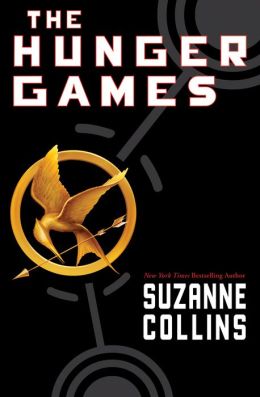
The Hunger Games
By Suzanne Collins
The Hunger Games Series, Book 1
# Pgs: 384
_________________________________________________________________________________
Overview:
In the ruins of a place once known as North America lies the nation of Panem, a shining Capitol surrounded by twelve outlying districts. The Capitol is harsh and cruel and keeps the districts in line by forcing them all to send one boy and one girl between the ages of twelve and eighteen to participate in the annual Hunger Games, a fight to the death on live TV. Sixteen-year-old Katniss Everdeen, who lives alone with her mother and younger sister, regards it as a death sentence when she is forced to represent her district in the Games. But Katniss has been close to dead before-and survival.
_________________________________________________________________________________
Review:
When I first read The Hunger Games by Suzanne Collins about six years ago, it was just a secret treasure. It was one of those things where I read the book, loved it beyond belief, and tried to convince anyone and everyone who would listen of its greatness. Of course, no one would listen to me, and so the secret was kept. People have a habit of ignoring great things until said things are exposed to the status quo. For years The Hunger Games remained one of my secrets, and I came possessive of it. By originally defending it from others who chose to mock it, as well as how fond I was of the plot and symbolism, this book (in a sense) became mine. That’s something that happens with the books I love the most.
And then the tragic part happened when I came into school years later and everyone was raving about the book, and explaining to me how awesome it was, and how it’s going to become a movie. Anger was one of the main emotions during that one period, and a sort of jealousy perhaps. That book was mine. I defended it. I knew the words, the story, and the characters. I knew them first. They wanted to explain to me its wonder? They wanted me to read the book I already read?
Once the popularity slightly blew over, though it waited eagerly in the shadows in patience, again people felt the need to mock it. Like, it’s a great book, and I’ll talk about it for the first month, but once everyone else likes the book and is talking about it then I’m done with it. Other people liking something that I like are so yesterday, so I’m going to insult it. The novelty is lost. That’s how popularity works, I suppose, and it’s exasperating.
Now that I’m done with all of that frustration, let’s actually talk about the book itself. To begin with, I want to point out the awesomeness of Peeta Mellark being the son of a baker and having the name Peeta (pronounced pita, like pita bread). With that done, I also want to point out that people are wont to focus on the melodramatic, angsty, teenage romance over the actual theme of the book, so give this book some credit. I mean, love is a big thing in this book, but so is war. So is a dissatisfaction and fear of the government. The government runs on fear, it controls its people with fear and a lack of knowledge. I mean, there are twelve separate Districts, each with different specialties like coal mining and fishing and industry. No one district knows something to the extent of the next, which likewise keeps the people under the government’s power. And the hunger games themselves are there to make people believe that they are helpless, that the government can do anything they want to do to you and there is nothing you can do unless you want to face the consequences.
The movie portrays the whole thing like Peeta and Katniss were destined to be together, almost, but that’s not the case at all. Peeta is actually a disappointment in the sense that had they not both been called for the hunger games, he probably wouldn’t have spoken up at all about his love for Katniss, and Katniss would’ve eventually married Gale. Katniss actually loved Gale, though the difference between her love for Gale and her love for Peeta stems from the fact that she only fought for her life alongside one.
For Katniss- she didn’t love Peeta at all in the beginning. I’m not even sure she fell for him in the first book, though by the end there must’ve been some kind of an interest. That’s not to say that she didn’t care about him at all, but for her that whole romance between them was a matter of convenience. She had no idea that Peeta actually loved her. I mean, he announced it for the first time on live television, during the period where each of the tributes had to suck up to the rest of the world. What was she supposed to think other than that it was a ruse? For all she knew, at the beginning, he was the enemy. I mean, sure, they were some sort of allies, but it hadn’t really extended beyond that until the tracker-jacker incident when Peeta risked himself to help her get away, and when they fought together to stay alive. After that, they became “brothers of war”. There’s something to be said about fighting for your life alongside someone else just as determined to stay alive, to keep each other aside, for as long as possible. The option of loving Peeta hadn’t even been made aware to Katniss, though to us it was clear, until the end. That might’ve been the actual spark which allowed her to feel.
Okay, so maybe I’m a little caught up on the romance aspect too—but all Katniss was trying to do was to stay alive so that she could make it home to her sister. She was doing it for her sister, for herself, and for Gale. She made a promise. She kept Peeta alive because they were in it together, they came from the same district, she didn’t want her sister or her district to be disappointed in her, and she didn’t want to lose herself—her integrity—to the games. By playing along with the whole “in love” thing, in benefitted her and increased her chances of survival. More than that, having love and something to hope for in a place that supposed to be hopeless was an act of defiance.
Katniss was all about defiance. It’s why she became the symbol, and the mocking-jay became the symbol, for freedom and rebellion later in the series. The berry scene? It wasn’t to bring Peeta home with her. It wasn’t because she loved him. It wasn’t for her sister, or for Gale, or for her district, or anything. It was an act of rebellion. The Capital had to have a winner for the Games, but someone had to die. Katniss convincing Peeta to trust her and eat the berry was symbolic for saying that the people of the districts, those in poverty and repressed by their government, they still had power. Katniss, the people, they could control the government. All or nothing.
I still love this book a lot, and I probably could keep going on about it. I mean, it’s not my top book ever, but it’s still one of my minority favorites (if that makes any sense). I didn’t like the second book so much; I thought that it was repetitious of the first book, and after reading the third I thought that the basic plot lines of the last two books of the trilogy would’ve been so much more effective had the plots of the second and third books been switched. After reading the third book, I threw it at the wall. I liked it less than the second. I might’ve actually appreciated it had the basic plot line come after the first book, and the basic plot line of the second come after that. I don’t know if that explanation makes any sense, but that’s what I think. The plots of the second and third should’ve been switched. There, that says it all.
All said and done, I definitely would rate this as a five out of five and recommend it for lovers of the dystopian society, sci-fi, somewhat romantic, power to the people, people. That said, thanks for reading.