Friday, February 28, 2014

"Storm" by Donna Jo Napoli (U1 & U2)

Something to Think About

Storm

By Donna Jo Napoli


Storm

# Pgs: 368
___________________________________________________________________________________

Overview:

A sixteen-year-old stowaway discovers her destiny on Noah’s ark in this riveting reimagining from award-winning author Donna Jo Napoli, available in time for the March 2014 major motion picture Noah.

The rain starts suddenly, hard and fast. After days of downpour, her family lost, Sebah takes shelter in a tree, eating pine cones and the raw meat of animals that float by. With each passing day, her companion, a boy named Aban, grows weaker. When their tree is struck by lightning, Sebah is tempted just to die in the flames rather than succumb to a slow, watery death. Instead, she and Aban build a raft. What they find on the stormy seas is beyond imagining: a gigantic ark. But Sebah does not know what she’ll find on board, and Aban is too weak to leave their raft.

Themes of family, loss, and ultimately, survival and love make for a timeless story. Donna Jo Napoli has imagined a new protagonist to tell the story of Noah and his ark. As rain batters the earth, Noah, his family, and hordes of animals wait out the storm, ready to carry out their duty of repopulating the earth. Hidden below deck…is Sebah.


___________________________________________________________________________________

Review:

This was an interesting book to read. I have to say that I was rather encouraged to read it after reading through the overview. I mean, think about it; what would you do if it just started to rain? then flood? and the only place you had to go... was up?
Napoli creates this story from an interesting, somewhat unexpected point of view. Not so much from the character herself as from the way the world acts around her perhaps. Maybe the statement above would better be corrected as; Napoli creates this story from an interesting setting, and yet somehow it's more than that.
When I think about religion, with the way that religion and religious figures are portrayed today, sure you think about uppity, strict, know-it-all snobs. Or you think of over purified, holier than thou, kind, wise, everlasting figures. The way Napoli creates it is nothing short of intriguing, interesting, somewhat beautiful. I don't know, maybe it's just the way that everything's portrayed.
I mean, this book isn't exactly emotionally inspiring as with causing me to cry or laugh out loud, so much as just thoughtful, and reflective. Like the still surface of a deep pool of water. Beautiful in it's own way. And blunt. It doesn't go roundabout to describe what it's trying to say. It gets right to the point; direct. Interesting.

There are some aspects of the story that are not so easily appreciated. Because of the way that people view religion --either in high respect or utter disgust-- and how religious people are portrayed today --abuse of power, too high and mighty-- this is a story that may not be so easily understood. One thing that you have to consider about this book is the setting. The time and the place that this book takes place; people are of course going to be different than today. The values especially will change. Religious people back then may have been kind and holy and compassionate, but their versions of kind and compassion were vastly different than what they are today.

There wasn't equality back then, for example, and even so equality is still a struggle for us today as well. The form of justice lied mostly in whether people viewed it as right or wrong at the time, or whether or not you  crossed the wrong person. Women weren't safe. Today we have technology and stricter views about how to treat people. Back then it was generalized, and the vast majority chose which people deserve to be treated with respect. That would've been men. And if you're surprised by how Noah and his family act? You need to seriously consider this. It was a different time, and there are multiple different cases throughout the Bible depicting how men acted back then. We weren't just cut and dry; we were bloody, and dealt out our own justices.

Maybe this story doesn't exactly follow the Bible, but there are two other things to consider when reading this book. The first is that this is a fictional novel; it's not supposed to follow the exact story. Think of it as a fanfictional piece; Sebah is an original character, the main character, and so the story must be told with her in mind. The second thing to consider is the size of the story within the Bible and the size of the world, the history of the world, the geography of the world, within which it is told. You can't expect things to be exactly the same, and if you do then perhaps this book isn't quite for you. As it is, I think Storm follows along with the story from the Bible quite well.

It's hard to imagine exactly who Sebah is and what she's feeling throughout the story. Jo Napoli writes this in a way such that I feel emotionally detached from Sebah. I can imagine the things she goes through, I can see the story unfold through her eyes, feel the cold and the wind and the rain. The way she acts gives way to how she feels, some of the things she says, some of things that happen to her. Yet throughout the story I am consciously aware of how seperate we are. I don't, in a sense, become one with the character. I'm drawn into the book, and yet seperate from it. Like having an out of body experience, I can gaze down and see what's happening, and yet I am not a part of it.

Sebah as a character is somewhat unintelligent, which is acceptable given the time period. She nearly jumps to make her own choices, and yet relies dependently upon others who, as Napoli tells, are stronger to survive. It doesn't seem like any of her choices actually effect her. The plot unfurls and she's just thrown into the thick of things. Things happen around her that keep her alive, her reliance on everything else is nearly overwhelming. Because there was such an emotional detachment for me, I never once thought she actually felt the struggle despite knowing that there was one.

This book had a compelling, however predictable, plot line. The weather extremes and the imagery were perfectly depicted and described; I could see it all happening. There were parts of it that I didn't much understand; whether or not that's to be blamed on the book or on my own lack of knowledge about the Bible's "Noah's Arc" has yet to be determined. I suppose one of the questions I had comes from the time line throughout which this book takes place. My own understanding of Noah's Arc, what I've been told all through growing up, is that it rained for forty days and forty nights. After some time passed, Noah sent out one bird (which did not come back) and then he sent out the dove (which came back with an olive branch) to see if there was land. And then it seemed that Noah knew that it was time to get out of the arc. And that's that.

The way this story is told, the time line that is, I'm not quite sure if the details that Napoli used are correct or not. Not that that's an actual problem, though for me it is. I'm actually quite curious; it's killing me to not know. And some of the other parts of the book as pertaining to the relationship between the Bible as it tells this and Storm as it tells this has me confused as well.

I don't know. This wasn't a perfect book. I mean. I knew about the "Noah's Arc" plot line before I read this, but having involved Sebah and her own personal problems into this, it was still very predictable. I didn't even feel the need to do a victory dance after all of my predictions came through.

One of the other original characters that's in this story just seems sort of random. Of course, you have to expect that more than one person has to have survived the storm, but honestly-- this character just seems to have washed up on a whim. And the fact that this character who (if you read the story, you'll know who it is) just seems to be able to do everything? Honestly! It's like Napoli was trying to write up a super-hero and we got stuck with him--everything works in his favor. So it seems anyway.

Despite my many critiques about this story, I really did enjoy reading this. Storm gives an interesting take on an otherwise happy-ending sort of Bible story. It was deep and thoughtful and not perfect. I like this book, I enjoyed it, I'm not entirely in love with it although I do adore it. As such, I rate this book a three point five out of five and recommend it to the curious, those that love historical or mythological fiction (although the religious aspect of this book isn't actually all that strong), and those that like different takes on things.

Rest assured that this book is different.

Thanks for reading~

Friday, February 14, 2014

"Mind Games" by Kiersten White (T1 & T2)

Somewhere Between "Huh" and "Wow"

Mind Games

By Kiersten White

The Mind Games Series, Book 1

Mind Games

# Pgs: 304

_________________________________________________________________________________

Overview:


Perfect for fans of Sara Shepard's The Lying Game series, Kiersten White's Mind Games, a novel about two sisters trapped in a web of deceit, was called "lightning fast and fabulously fun" by bestselling author Laini Taylor.

Fia and Annie are as close as two sisters can be. They look out for each other. Protect each other. And most importantly, they keep each other's secrets, even the most dangerous ones: Annie is blind, but can see visions of the future; Fia was born with flawless intuition—her first impulse is always exactly right. When the sisters are offered a place at an elite boarding school, Fia realizes that something is wrong . . . but she doesn't grasp just how wrong. The Keane Institute is no ordinary school, and Fia is soon used for everything from picking stocks to planting bombs. If she tries to refuse, they threaten her with Annie's life. Now Fia's falling in love with a boy who has dark secrets of his own. And with his help, she's ready to fight back. They stole her past. They control her present. But she won't let them take her future.

_________________________________________________________________________________

Review:

That's the impression that's left over from reading this book; I'm stuck somewhere between "huh" and "wow".

It was a good book.

Mind Games by Kiersten White is about a girl with perfect instincts--they're always in her favor. Yet the amount of responcibilities she has growing up is just astounding. Is it any wonder that the girl, Sofia, seems on the verge of losing her mind?

It's crazy how this book works it all out. From the beginning we're introduced to the dark side of this world. In order to protect her sister Annie, Sofia has to undertake certain endeavors for a school that took her and her sister in. The school itself is a rather corrupt, underhanded, scheming sort of business. To keep Sofia in their hands, they keep Annie a prisoner. Because of this, Sofia must become the perfect little soldier.

At the beginning of the story, we're faced with the situation from the point of view of Sofia as she contemplates taking the life of an innocent. Keane, the head of the school she has no choice but to work for, gave her the order. In order to protect Annie, she cannot do otherwise. Except that she does.

I'm giving away the story, methinks. But it's just such an interesting, intriguing, though-provoking story. I love this book for an entirely different reasons than most of the books that I read. It's dark, dramatic, deep. There's a sort of action-packed heroism about the wickedness Fia's been forced into. As the reader, you fall for her, almost. Not in love, that is, though it is a sort of love. You fall into sympathy for her, pity. The dark side about her character is what draws the reader in most. When faced with a decision that is not your own, control that you can't control, how is it that you can come into your own? How do you make you own choices, decisions, life?

Sofia becomes more so a sort of object or weapon under the unforgiving hand of the school. She feels a sense of duty, not as their little puppet, but as the younger sister of a blind girl. They're all each other has, the sisters. They don't have anyone or anything else. Sofia has to keep her safe. Annie, as the older sister, feels she has to keep Fia safe. They keep trying to protect the other, but no longer do they understand each other because... The school has changed them. Sofia became someone completely different--darker, not necessarily evil, but she has no choice. It's easier for her to see just how evil the rest of the world is. How unforgiving it is. Through all that she's been through, she can't help what she's become. And with Annie... she's just starting to realize exactly what's going on. Sure, she can see the obvious. But the title of the book plays more into the storyline anyways. It's all one big mind game, and Annie is just starting to realize exactly what that means.

Who they can trust.

Can they trust anyone?

Can they trust each other?

I love this book. It's not simple. It's not always that easy to read. The facts aren't laid out for you. It's thought provoking. Kiersten draws us into the book through something more than just words. The pain we feel, the sympathy, the pity, the hope, the fear; everything we feel for the characters is just as real as if it weren't a book. Sofia becomes her own character, her own person, in reality. Just as people aren't easy to understand, neither is Sofia. We may read the book strongly through her point of view but that doesn't make it any easier to predict just what choices she'll make or why.

She's just as unpredictable as her intuition entails.

I know I've made this sound as if it's only from her point of view, but her sister tells the story just as much as she. And Annie has some very interesting things to say. It makes me wonder how or what I could do to protect my younger sister if I were the older one, and I were blind? What could I do to draw my sister back into herself rather then let her sink further and further into the darkness? What could I do when I can see the future of everyone else... but not her?

There was a point in the book where Annie saw something, and I thought for sure it couldn't be all that it was meant to be. I thought for sure that I understood Sofia perfectly right up until that point, that she couldn't possibly do what Annie saw. Everything Sofia does is to protect her sister, to keep her safe. She couldn't possibly...

Now I'm left sitting here in wonder of this book, thinking impossible things. This is a beautiful book; an intricate lattice of knots strung together with the strings of fate. It's not a flashy book, it's not overly simple. It will not be known for being overly dramatic, or infuriatingly romantic in that "I will die if you do not love me way". This is complicated, deep. It goes on so much further than the surface plot. It's beautiful because of it's depth, it's darkness, the near horror and pity and hope involved in creating this. It's realistic though it isn't at all realistic; it's almost like a dream. Almost like a nightmare. Somewhere in between.

The plot is strong, and White uses flashback as a literary technique to develope our understanding of what's happening, and our understanding of the characters themselves. She creates an illusion, decieves us in this way where we think we know what exactly is going to happen and yet we don't. That's what's beautiful about this book. We don't know what we think we do; the deception.

This book definitely isn't for everyone. It's not like the other books I usually read. You have to want or be willing to think about these kinds of things in order to like or even understand exactly the kind of message this book is trying to say. Sofia is being pushed to the breaking point, and at one point will she draw the line at keeping Annie safe? She's on a path of destruction. Forced to perform to her best possible ability; the pressure of protecting her sister, of having to protect her sister because there is no one else; how utterly conflicted she is by the things she must do... When will she draw the line?

I read the paperback version of the book, and I know above that I wrote that there are three hundred of so pages in this book, it really didn't seem like it. For being such a good book, it felt short and entirely over entirely too soon. I can't wait for the next book. I'm already drawn in although I've yet to own it or read another word. What White established with this book has won me over, and I imensely anticipate reading her next book. I'm also going to look into reading her other books.

I don't know that I'll like them so much; the covers make me think of snobby, pretensious, unimpressibly dramatic whining girls who don't know quite what they're in for. Who might also be involved in the sort of love stories that aren't love stories at all; just a first meeting between two people and then sudden, ridiculous, "I can't live without you love" that comes out of nowhere without any sort of developement.

But then, I might just be getting a little prejudice.

Regardless, White's book has won me over. I can't wait to read the next book in the series.

Five out of five, and... I'm not sure who to recommend this for.

You'll just have to find out for yourself if you like it or not.

Thanks for reading this post! Hope you find yourself reading a good book real soon, and if you don't like to read then I don't know what you're doing here in the first place. Thanks again for reading!

Thursday, February 13, 2014

"A Breath of Frost" by Alyxandra Harvey (S2)

A Breath of Fresh Air

A Breath of Frost

By Alyxandra Harvey

The Lovegrove Legacy Series, Book 1

A Breath of Frost

# Pgs: 304

_________________________________________________________________________________

Overview:


In 1814, three cousins-Gretchen, Emma, and Penelope-discover their family lineage of witchcraft when a binding spell is broken, allowing their individual magical powers to manifest. Now, beyond the manicured gardens and ballrooms of Regency London, an alluring underworld available only to those with power is revealed to the cousins. By claiming their power, the three cousins have accidentally opened the gates to the underworld. Now ghouls, hellhounds-and most terrifying of all, the spirits of dark witches known as the Greymalkin Sisters-are hunting and killing young debutante witches for their powers. And, somehow, Emma is connected to the murders...because she keeps finding the bodies. Can the cousins seal the gates before another witch is killed...or even worse, before their new gifts are stripped away?
_________________________________________________________________________________

Review:

This has to be one of the cutest books that I've read in a while. I've just finished reading A Breath of Frost by Alyxandra Harvey and I'm seriously enchanted by the words Harvey has woven together in this tale of witches and mystery. I don't think I've ever read a book quite like this one.

The manner of which Harvey's writing style is soft, feather-like. It's not overly dramatic, the murders that take place within the book aren't incredibly gory, there aren't any disturbing kinds of aspects that might otherwise distract us from the world that Harvey creates. I say that her style is soft because it doesn't force us to fall in love with the book. Like a gentle fingertip, it presses us in the back of our minds onwards towards this wonderfully elusive world of witches and magic and ghosts. Like a gentle finger, it seductively entices us in a dare to wander towards Harvey's words in almost a haze. Reading this book, I completely lost myself.

I wasn't distracted by any unimportant facts that might've existed in the book. There wasn't any kind of emotional rollercoaster that some books take you on. It didn't make me feel angry about something that happened, or about the characters themselves. I really can't think of any other way to describe this book other than soft. As with any "witchy" types of books, there were dark facets about this novel. And yet, it wasn't of the disturbing, horrific, gruesome or grim kind. Had the dark details--the deaths, the ghosts, the madness of a witch losing her familiar, even the iron nails and their properties--been written in any other way, perhaps by any other hand, this book would lose its illusions of gentle guidance. Instead, we'd be drawn in by the dark and disturbing, which would've distracted us as the reader away from the "forbidden love" and the mystery.

What happened to Emma's mother? Who is Moira? Of what importance is One-Eyed Joe to this tale? Of what significance is Greymalkin blood? What of Daphne and Cormac and Sophie? And what of the bodies of murdered girls?

The world that Harvey created is rather mysterious and mystical and wonderous. There are so many possiblities and directions that this book could've been taken, so many that the next book can take. I'm still stuck in this daze of magic that somehow I was tricked into. It's safe to say that I love this book.

Emma (Lovegrove) Day is the daughter of an insane mother, Theodora (Lovegrove) Day, and Lord Alphonse Day, a man of few words and even fewer emotional capabilities. As such, she's often left alone to her own devices and to the devices of her two cousins. You can imagine the kinds of trouble they get into, especially as young women during the eighteen hundreds. But when strange things run afoul and hidden things they never knew are revealed, what are three growing witches to do?

Emma is a confident, rebellious, not at all soft kind of debutante. When I read the book, I expected something completely different when I learned that the three cousins were debutantes. None of them were as I expected. Emma curses like a sailer and has her own rather opinionated mind about the world; she studies the stars. Gretchen is a cross between a tomboy (as close as an upstanding member of society can get to being one, at least) and a bookworm; she'd rather hide out in a library then dance the night away. And Penelope is, perhaps, the most flirtatious of the trio; she consistantly and amusingly quotes Shakespearian curses at the most opportune of times, and comes from a family who wants her to make her own decisions about marrige and life.

It's hard not to fall in love with their mischevious natures when all the rest of their world seems dangerous and clouted by stern officials, and even sterner rules.

Cormac Fairfax is the love interest of Emma Day. As stated as before, their love is one that is forbidden, and often one that is denied. Where as Emma begins to believe that she is being played with, Cormac just wants to find a way to save his family name, and a way to protect Emma from... the Order. The Keepers. The Greybeards. Their love wasn't one that kept getting thrown back at us, in our faces, again and again. It wasn't the kind of obnoxious love you find in Twilight or the kind of lusty love you find in The Notebook. It was soft and sweet, heated in a way that's soft and wonderful, fluffy. It didn't distract.

So their emotions for each other are a little confusing. Not for us, but for them. You have to remember, this takes place in a society where such things as Greymalkin murders makes everyone suspicious, especially of the young adult witches who are only just coming into their powers. Even more so when one of their mothers practiced a powerful magic against them. The only problem revolving around that aspect is that no one remembers what exactly happened, or why.

With so many questions to be answered, and so many mysteries to be solved, is it any wonder that it's so easy to fall in love with such a book as this? I'm anticipating the next book in the series, not with a dreadful, "Oh my gosh, it needs to come out NOW" kind of need, but with the same gentle, persistant hand that guided me into loving this book in the first place do I find myself waiting for the next book.

This wasn't a fast-paced novel, nor was it slow. Like the three little bears, the three bowls of porridge, and the three beds, this book was just right.

This book was told from multiple POVs, and each character was well developed. The history the author gave us to think about was just enough to sate the appetite, but I'm interested in finding out more of the Harvey's witching world. Filled with gargoyles, familiars, shape-shifters, witches, goblins and ghosts and ghouls, I wonder what Harvey will come up with next?

Like I stated before, this book was soft and warm, urgent. While it was hard to put down, I didn't feel a need to keep reading continuously or conisistantly. Well, I did, but just not a need need. It was like I needed to keep reading, but it wouldn't be a life or death situation for me if I stopped reading. Believe it or not, this does happen with some of the books that I read. As such, this book is rated as a four out of five. I love it, but I'm not completely in love with it. I need to read the book, but I don't need it. I've thoroughly enjoyed the book, but it doesn't make me want to read it again. Not immediately, anyway.

So I'll recommend this book to anyone who loves fantasy and supernatural books; mysteries. There's romance here, sure, but it's not enough to be considered a romance I think. There were certain ideas in this book that remind me of old story kinds of witch books and tales, filled with goblins and ghouls and ghosts (oh my).

I really liked this book, so if you want to read it, I recommend it.

Thanks for reading! And leave a comment on what you think. Or follow my blog. Whatever works. I'm just trying to share the love~ ^^ Thanks again!

Tuesday, February 11, 2014

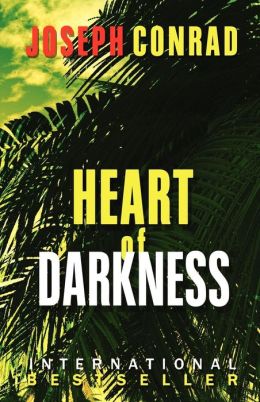
"Heart of Darkness" Essay. (S1)

Heart of Darkness

By Joseph Conrad

Heart of Darkness

Short Story

# Pgs: 112

_________________________________________________________________________________

Overview:

A masterpiece of twentieth-century writing, Heart of Darkness (1902) exposes the tenuous fabric that holds "civilization" together and the brutal horror at the center of European colonialism. Conrad's crowning achievement recounts Marlow's physical and psychological journey deep into the heart of the Belgian Congo in search of the mysterious trader Kurtz.
Joyce Carol Oates on Joseph Conrad's Heart of Darkness:
Heart of Darkness has had an influence that goes beyond the specifically literary. This parable of a man's 'heart of darkness' dramatized in the alleged 'Dark Continent' of Africa transcended its late Victorian era to acquire the stature of one of the great, if troubling, visionary works of western civilization."

_________________________________________________________________________________

Review... Er... Essay?

Yeah, so instead of a book review I'm going to post my Heart of Darkness essay here. It's going to be boring, but I needed the grade... Sorry. I can tell you that Heart of Darkness holds a lot of beautifully interesting, however drawn out, contrasting light and dark imagery. It adds to the sense of horror about the short story. That's one thing that I actually love about this book. However, as a YA, it took a lot of patience to read just because there is so much imagery and description involved within it's pages. The symbolism is amazing. It was a drag to read so early in the morning (as a requirement for my English class) but I think that under different circumstances, there might've been the slightest chance the I might've liked it more than I did. Just the littlest bit, though, and I wouldn't have ever read this book on my own. It's not the kind of book that I'm usually reading. Then again...

In any case, prepare for boring. Here's my essay (and if you copy it for your own English essays then know that that is cheating and I will hunt you down and massacre you with a broomstick, whoever and whereever you are. Cheating is not fair. It's cheating. There's really nothing more I need to say. Just get off your lazy butt and write it yourself. God. Ok, now I'm done, and here's the boring essay! ^^):

    Joseph Conrad, who was a dominant British author throughout the late nineteenth and early twentieth centuries, wrote Heart of Darkness in 1899 to convey that it is within human nature to search for a source of light within the dark. This means that people will always try to find the good in what can seem like a malicious, or bad, time. This does not mean, however, that they will find that light. In Joseph Conrad’s Heart of Darkness, Conrad uses vast amounts of contrasting light and dark imagery to support this theme throughout the novella.

    Throughout the novella Heart of Darkness, Joseph Conrad continuously writes in such a way that light gives in to darkness. It was with this in mind that the main narrative character, Marlow, first yearns to set out to Africa. As such, Marlow states, “Light came out of the river since---you say Knights? Yes; but it is like a running blaze on a plain, like a flash of lightning in the clouds. We live in the flicker---may it last as long as the old earth keeps rolling! But darkness was here yesterday.” To this Marlow refers to the British imperialism that is happening in Africa during this time period. What was once unknown or dark to them, the heart of Africa, became light with knowledge. Meaning that something within Africa became known to the British imperialists to be of value, which is at the time considered good. This “light” in the dark of Africa is ivory; the tusks from elephants. However, in comparing the happiness of the discovery to a flash of lightning, Marlow is foreshadowing that the good about this situation will not last. Marlow likewise compares the darkness of Africa, all that was unknown about it, to a snake. He says that, “The snake had charmed me.” The snake is a familiar element of symbolism in literature. Consider the “Book of Genesis” from the Bible in which a snake also tricks Eve into eating an apple from the tree of Life. If the snake in Heart of Darkness refers to the darkness, or all that is not yet known of Africa, then Marlow’s statement about the snake charming him means that Marlow gave in to his temptation to, in a sense, eat an apple from the tree of Life. Marlow wants to shed light on the British imperialistic situation in Africa, and thus what Marlow at first considers a good thing (imperialism) is “...like a flash of lightning in the clouds.” The good will soon give way, but Marlow still looks for it. To do so, Marlow uses his aunt’s connections in “the Company” to become the captain of a steamboat in their employ. Once made a captain, he goes to the the heart of darkness; the heart of Africa.

    Throughout the rest of Joseph Conrad’s Heart of Darkness, Marlow encounters men with “hearts of darkness”. Towards the beginning of part two, Conrad uses imagery in Marlow’s narrative to symbolise how Marlow himself is finding his own heart of darkness. Marlow describes, “The sun was low; and leaning forward side by side, they seemed to be tugging painfully uphill their two ridiculus shadows of unequal length, that trailed behind them slowly over the tall grass without bending a single blade.” Marlow is speaking about two men who just a moment before he had eavesdropped upon. Marlow overheard them speaking about hanging another man named Kurtz, who up to this point had only briefly been spoken about in an almost idealised tone. Conrad’s imagery here seems to make the tone more menacing, if it weren’t already made so by Conrad’s earlier imagery. The sun becomes like Marlow’s hope for Africa. That light he once saw in the mystery of Africa is setting. In the sun’s setting there is revealed the darkness that Marlow is beginning to see about all men in the shapes of the two irregular shadows of the retreating men on the hill. Conrad describes their ascent with an image as if the two men have to “painfully” carry their darkness with them uphill, heading towards the sun which is now setting. In this, Marlow begins to see their darkness. In the next paragraph, Marlow begins to reveal said darkness unknowingly within himself. He does so with the words, “Long afterwards the news came that all the donkeys were dead. I know nothing as to the fate of the less valuable animals. They, no doubt, like the rest of us, found what they deserved. I did not inquire. I was then rather excited at the prospect of meeting Kurtz very soon.” The sun is setting on the light within Marlow, as seen with Marlow stating that the men in this expedition were “animals” of less value than the dead donkeys. As Marlow is still talking about the two men who were earlier walking towards the sun set with their “ridiculous shadows”, Marlow reveals his own inner darkness. As to the statement of saying he was distracted by the “prospect of meeting Kurtz”, Marlow reveals the new light in which he travels towards. Like the two men before him, Marlow is traveling towards a sun, which reveals his own ridiculous shadow. Likewise, as Marlow himself gives in to a heart of darkness, so too does his idealism for the British imperialism in Africa. The lights in both the hearts of Marlow and Africa are revealed to be dark. Kurtz is Marlow’s only hope that there is still some kind of good about it all.

    It is within part three that the aforementioned lightning storm finally passed, the “flicker that we live in” went out. This is as a result of Marlow finally meeting Kurtz, his last hope for light, and seeing that there was none. Marlow, referring to Kurtz, states that “His was an impenetrable darkness. I looked at him as you peer down at a man who is lying at the bottom of a precipice where the sun never shines.” Singularly, this statement refers to Kurtz, who had become the symbol for Marlow’s hope about the imperialism within Africa, and to Marlow. Kurtz, Marlow learns by the end, holds one of the darkest hearts of all. Marlow, with no hope left of Africa, with the discovery of just what Kurtz did to get the ivory, and with all the dark hearts he had seen from others thus far, completely gained his own heart of darkness. “The vision seemed to enter the house with me---the stretcher, the phantom-bearers, the wild crowd of obedient worshippers, the gloom of the forests, the glitter of the reach between the murky bends, the beat of the drum, regular and muffled like the beating of a heart---the heart of a conquering darkness.”

    Joseph Conrad successfully used light and dark imagery to show how it is only human nature for a person to look for the rightness within a potentially wrong situation. Conrad stresses, however, that a person may not find the “light” in it, although that is always what a person is moving towards. Conrad used Marlow as an example for this idea. Every time that Marlow found a light to head towards, he found darkness there instead. Marlow would then choose a new light to focus on, and instead once again be lost in the dark. As such, it is only within human nature to search for the light in dark situations, despite not always finding it.

"Plain Kate" by Erin Bow (R2)

Plain--

Plain Kate

by Erin Bow

Plain Kate

# Pgs: 320

_________________________________________________________________________________

Overview:

A knife-sharp debut novel that leaves its mark.
Plain Kate lives in a world of superstitions and curses, where a song can heal a wound and a shadow can work deep magic. When Kate's village falls on hard times - crops fail, and even Kate's father falls victim to a deadly fever - the townspeople look for someone to blame, and their eyes fall on Kate.

Enter Linay, a stranger with a proposition: In exchange for her shadow, he'll give Kate the means to escape the town that seems set to burn her, and what's more, he'll grant her heart's wish. It's a chance for her to start over, to find a home, a family, a place to belong. But Kate soon realizes that she can't live shadowless forever -- and that Linay's designs are darker than she ever dreamed.

_________________________________________________________________________________

Review:

This is a very misleading book; Plain Kate by Erin Bow. From the whimsical cover to the simplicity of Bow's storytelling, this book is misleading. It might be off-putting for some, though many might not even notice how dark this story is. For those of you who haven't read the overview or the book itself, this book revolves around the fear of witches and how people judge people based on how they look.

We're going to begin with what I didn't like about this book.

Aside from the misleading cover, there isn't much. The second half of the book goes from "ok, it's good so far" to "this is all over the place". There are so many different little complications that happen in the second half of the book that aren't exactly explaing, that are just so random sometimes, that I'm not sure quite what to think. For example, one moment everything's all hunky-dory with the main character and her gypsy friend, Drina, at the market, and the next she's getting her ear chopped off. Now I understand that this book is supposed to be dark, but there wasn't any kind of forshadowing leading up to that particular moment. The sudden moment of "oh hell, what's happening?" was just kinda thrown in our faces. That seems to be a consistantly persistant annoyance that happens throughout the novel. Not that I need some kind of build up to get to a sudden plot twist, but that's something that, as a reader, I've become used to. It's also something that's nice to read.

The best kind of books add this "quiet" hinting of darkness about the book before shoving it at you. Just think of all the imagery in Heart of Darkness for example; the extreme contrasting in the descriptions of dark and light, black and white colors. Before we actually get to what's happening so deep in the jungle with Kurtz, the imagery builds up this idea of symbolic horror; as darkness disguised as light such as with Marlow idolizing Kurtz even though Kurtz... But I'm not here to review Heart of Darkness, which if you were to read it then just a warning; this is not a book for the light hearted. Seriously, it takes a lot of patience and attention as a teenager to read.

Back to Plain Kate, it didn't have any of that kind of dramatic, symbolic, or dark and light type of imagery to build up all the horrific things that happen in this book. It gives off this sense of whimsical happenstance, here's a happy little orphan girl with her cat that's going to go off on this adventure to get back her shadow... Oh wait, everyone thinks she's a witch. And you all know what happens to witches, right?

Suddenly ears are chopped off, widows or unmarried woman, innocents, are burned, hanged, drowned, scarred, because of fear. It happens. I get it, especially in books like these where being a witch is a bad thing. I just wish that there was some sort of build up.

That said, I otherwise enjoyed the book. For something so dark, it's quite a simple writing style. Bow blends in these old traditional folktale type aspects of witches and wizardry and ghosts with her own dark fantasy type of story to create a world that, though black, is a rather... imaginative? Creative? Almost whimsical story to read. It just doesn't match the type of whimsical portrayed on the cover. Regardless, whatever it was that Bow achieved was enjoyable to a degree.

I don't much know how to describe the characters. Kate is likeable enough, I suppose. For being an orphan girl discriminated against for the trouble that seems to follow her and the colors of her eyes, it's understandable (however despicable) for her to make the decisions that she makes at the beginning of her journey. It wasn't really a smart move on her part, but it was all the choice she had. I don't know. I didn't much appreciate how naive she seemed to be the entire book, but I suppose that not all of the main characters are strong-willed, independent, and at least somewhat knowledgeable. I didn't love Kate, but I didn't hate her. I also didn't like how Kate just settled for the nickname "Plain Kate". In this way Bow drew me into the story, I suppose, 'cause if it were me I'd make sure the whole world knew that my name was actually "Kate" rather than "Plain Anything".

I'm not really a plain person. Boring, yes. Plain? Hell no.

Back on track, the relationship between Kate and Linay confused me a little. As he was old enough to be her father, yet that didn't quite seem to be the relationship they had, I'm not sure what relationship they had. It was a sort of love I've never really seen before in a novel. Not "Love" love, not friend love and not family love, but a sort of "grudging respect and need someone to love me" love. A love built on loneliness.

I think that's what I'm trying to say.

It makes sense to me, at least.

There was something else that I wanted to talk about before I wrapped this book review up, but I forgot what it was. Kinda like this book. I finished reading it a day ago, and I was all ready to review it. Two days later I found it in my locker and remembered. Maybe that's just me, but though this book is enjoyable, it's not exactly rememberable.

In any case, I'd rate this book a three out of five. Recommended to people who need to pass time and are looking for a dark, semi-whimsical type of book to read. For fantasy, old folktale type of book lovers.

Thanks for reading!

Leave a comment if you agree or disagree~

Wednesday, February 5, 2014

"Eden" by Keary Taylor (R1)

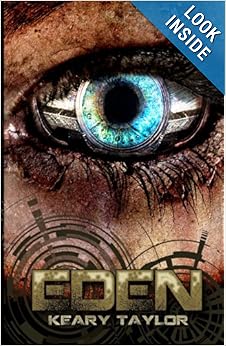
<3 This Book Cover

Eden

By Keary Taylor

The Eden Trilogy, Book 1


# Pgs: 420

_________________________________________________________________________________

Overview:


Eve knew the stories of the Fall, of a time before she wandered into the colony of Eden, unable to recall anything but her name. She’s seen the aftermath of the technology that infused human DNA with cybernetic matter, able to grow new organs and limbs, how it evolved out of control. The machine took over and the soul vanished. A world quickly losing its humanity isn’t just a story to her though. At eighteen, this world is Eve’s reality.

In their Fallen world, love feels like a selfish luxury, but not understanding what it is makes it difficult to choose between West, who makes her feel alive but keeps too many secrets, and Avian, who has always been there for her, but is seven years her senior. The technology wants to spread and it won’t stop until there is no new flesh to assimilate. With only two percent of the human population left, mankind is on the brink of extinction.

While fighting to keep Eden alive, Eve will discover that being human is about what you will do for those you love, not what your insides may be made of. And even if it gets you killed, love is always what separates them from the Fallen.

_________________________________________________________________________________

Review:

I read Keary Taylor's book Eden a couple years ago, but even today it has left a lasting impression on me. How do I know if I read it years ago? -I still remember it, and I still remember what happens within it's pages. I'm going to be honest with you, over half the books I read aren't that memorable. Maybe I just have a terrible memory, but most books aren't original enough, or able enough, to draw the reader into its pages.

So, you know that little phrase, "Never judge a book by its cover"?

We all do.

I mean literally, we all judge books by their cover. Sure, that phrase has some kind of deeper meaning, and sometimes it applies to actual books, but a good chunk of the time that phrase doesn't work. I'm serious, sometimes it's like the state of the cover tells us exactly how the book is going to be. If it's really bad photoshop, or there wasn't a lot of time spent on the cover, or it's just uninteresting, generally the book is like that too.

Authors, you can tell yourselves all you want that the cover doesn't matter so much, or that people don't judge books by their covers, but that's just ignorance. Humans are selfish creatures. We like to look at things. Covers attract us. And do you really want to seem like a borish, or just an "ugh" author because of your cover? The cover is a reflection of you and your book, so spend some time on that as well.

With that well covered (he he), whoever made the cover for Eden made a very smart decision. As well as being selfish beings, people have always been fascinated with the face and eyes. As such, this cover is uber cool. Just look at it! It tells us everything we need to know about the book. There's a girl, there are cyborgs, and it has to be a dystopian society ('cause of the dirt).

Now that the cover's attracted us to the book, it's all up to the overview to keep us there. The overview draws us in. Once that's done, we begin to read the story... And that's when Keary Taylor completely captivates us with her words. Everything about this book is great. It's original, it has a great plotline, the name of the main character is Eve (think that's anything to do with the Bible, almost?), the characters were wonderfully developed, and it's just a fun book to read.

Taylor supported whatever was currently happening within the plotline with history--and then she backed up the history with "facts". That's a vital piece to all fictional works that some authors don't seem to realize. A developed history and facts for the world that you create make the world believable. This kind of information supports the setting, and the setting supports the developement of the characters. For Taylor to make sure that we understood exactly what was happening within these pages basically set the foundation for the entire book--you have to know what happened to know what's happening.

Does that make any sense?

The romance aspect of this book bugged me a little, I'm not going to lie. As is the story for most romances, the main character, Eve, has to make a choice between two guys; West and Avian. And that's fine, not great or thrilling, but that's how it usually is. I guess it just kinda bugs me that Avian has just always been there, is seven years older then Eve, and almost seems confident that she'll make the responsible, safe choice. But with West, even then, he just seemed so assured and overconfident that she completely loved him. Both of them seemed to think she'd go with them. That's all fine and dandy, but then she just had to go and make a completely stupid choice! She chose the guy who, before the other character had showed up, had never really actively moved to show that he loved Eve.

I don't know. Taylor wrote it that way for a purpose, and it was a smart move because I'm sure that I'm not the only person who was upset by her decision. People, if by some insane reasoning decided that they did not like the first book, will buy the second book for that reason alone.

Eve is a strong, independent, loyal, yet a somewhat confused and annoying character. She's emotionally frustrating, but still likeable, to read. You want her to succeed in her goal, you want her to make the right choices, you're as devastated as her by some of the things that happen and that are revealed. Eve is a relateable character. An outsider among outsiders. She feels different, knows she's different, and is different. At some point or another, isn't that how we all feel? Maybe that's why she's so attracted to West. He definitely is an "outsider among outsiders". People are somewhat distant with him, just as they are with her. Except for Avian, that is, at least with her. He's protective of her.

Maybe I don't like the Avian and Eve pairing so much because for a good portion of the book I thought Avian was a lot older than seven years compared to her, and thought that he was actually more of a father figure to her, or a brother.

After all, isn't that really how Eve kind of viewed him in the beginning?

The bottom line is that Taylor dragged us so all-encompassingly into the book that we were on a somewhat emotional rollercoaster right along with the main characters. It's been a while since I read it, so maybe I don't know what I'm talking about, or maybe it's different now, but I really liked it. I didn't love it, but I liked it. For that reasoning, I'm going to rate this book a four out of five. Recommended for sci-fi, romance, dystopian society lovers~

Thank you for reading! ^^

Monday, February 3, 2014

"The Name of the Star" by Maureen Johnson (Q2)

Relief

The Name of the Star

By Maureen Johnson

The Shades of London Series, Book 1

The Name of the Star (Shades of London Series #1)

# Pgs: 384

_________________________________________________________________________________

Overview:

The day Louisiana teenager Rory Deveaux arrives in London marks a memorable occasion. For Rory, it's the start of a new life at a London boarding school. But for many, this will be remembered as the day a series of brutal murders broke out across the city, gruesome crimes mimicking the horrific Jack the Ripper in the autumn of 1888.

Soon "Rippermania" takes hold of modern-day London, and the police are left with few leads and no witnesses. Except one. Rory spotted the man police now believe to be the prime suspect. But she is the only one who saw him. Even her roommate, who was with her at the time, didn't notice the mysterious man. So why can only Rory see him? And more urgently, why has Rory become his next target? In this edge-of-your-seat thriller, full of suspense, humor, and romance, Rory will learn the truth about the secret ghost police of London and discover her own shocking abilities.

_________________________________________________________________________________

Review:

Do you have any idea how much of a relief it is to read a good book?

Lately, it just seems like I've been in a slump. Book after book has just left me feeling so disappointed. I've taken a pause from reading beause of it.

Suddenly, one day, I'm in study hall and I randomly pick this book off of the shelf. I get to reading it, and I can barely put it down for the moment that it takes to check it out of the library.

Looking at the cover, I guess that I was expecting this super crazy, gory, creepy, haunting, horror ghost story. I don't have a problem with that kind of stuff, but lately all of the ghost stories that I read are just a downer. It took a chapter, but suddenly I got completely hooked into this book. It's just so ridiculous--the main character, I mean. She's just a riot.

That's a good thing.

Seriously, from the first page of the book the main character, Rory, was just so endearing to me. She's brash, loud, witty, and it's just so funny sometimes to read her narrative. She's not really like any character that I've ever read before. Most characters try to stress the fact that they're oh so Holy, or kind, or smart, or hot, or generally someone's idea of perfect. This book kind of embrasses the idea that she's not. She's a real go-getter, responcible, yet fun and admits to not being a genius.

I'm going to spoil a small part of the book for you; there was this one point in the book where the main character starts choking on chicken just as she's about to show off. I had to put the book down because I was embaressed for her, and because it was just so funny. I mean, I've never really read a book before where the main character gets her strange, mysterious and oh so very permanent ghost powers from choking on food in front of a billion other people before.

I thought it was kinda funny.

I love Rory, especially at the beginning of the book. Towards the end, it seems like she becomes just the tiniest bit whiny. It's understandable though, 'cause there's a Jack the Ripper ghost out to get her, and she's in London when she was originally from Lousiana, and she has powers she never knew she could even get until she choked on food.

The plotline is also interesting. I've heard of Jack the Ripper before, but it wasn't until I started to read this book that I actually learned exactly who and what he is. I'm not saying that I think ol' Jack's a ghost, I'm saying that I knew that he was a murderer, but I never knew just what it was he did or why. I guess some parts of it are still a little foggy, but I still learned from it. And this plot was still interesting.

I mentioned earlier that I thought this book was going to be a gory, haunted, horror ghost book. If anything, it was more a mystery (which I just learned is what it was meant to be). It was a pretty darn good mystery too. This book definitely kept me guessing and curious. I can't wait to read the next book in the series. Maureen Johnson wrote this book in a way that's completely refreshing--to me, at least, if not you, but I've just been reading terrible books lately--that's young and funny and addictive. While some points of the book seem just a little weak in the way they're supported, overall the book is still pretty believeable. After all, the main character doesn't have to nearly die in some overly dramatic car crash or robbery or something. She could nearly die from choking on food. That's normal.

A lot of authors forget to make things normal at parts, to make it relateable and believeable.

I don't know, maybe it's just me, but Johnson's writing style was pretty good. The plot was pretty good. The historical facts that were woven into the tale were good. The characters were great, and funny, yet still serious when they need to be. This book was loose, and put together very well. I enjoyed it.

I'd definitely recommend this book to people, especially in supernatural, historical, mystery lovers. Oh, and by the way, there's even a touch of romance in this. It's just not overwhelmingly obnoxious. It's gentle and easy and there. In a good way, sort of.

I give this book a four or three and a half out of five.

It was fun to read, and a relief.

Read it.

"Ink" by Amanda Sun (Q1)

St-Ink

Ink

By Amanda Sun

Ink


# Pgs: 384

_________________________________________________________________________________

Overview:


Ink is in their blood.

On the heels of a family tragedy, Katie Greene must move halfway across the world. Stuck with her aunt in Shizuoka, Japan, Katie feels lost. Alone. She doesn't know the language, she can barely hold a pair of chopsticks and she can't seem to get the hang of taking her shoes off whenever she enters a building.

When Katie meets aloof but gorgeous Tomohiro, the star of the school's kendo team, she is intrigued by him…and a little scared. His tough attitude seems meant to keep her at a distance, and when they're near each other, strange things happen. Pens explode. Ink drips from nowhere. And unless Katie is seeing things, drawings come to life.

Somehow Tomo is connected to the kami, powerful ancient beings who once ruled Japan—and as feelings develop between Katie and Tomo, things begin to spiral out of control. The wrong people are starting to ask questions, and if they discover the truth, no one will be safe.
_________________________________________________________________________________

Review:

I'm not going to lie for this one, and I'm going to be blunt.

I had so many problems while reading this, personal or not I'm not quite sure. It's just that this book did not capture anything of my attention. This book was a drag to read, it took me forever to finish it. Everything about this book was so obnoxious it made me noxious. I became seriously concerned at parts that this book would never end.

From the first page of this book I was reminded of a manga or graphic novel, which is not necessarily bad. Except in this case it was. Let me explain; the artwork for mangas are awesome. I don't have a problem with that. It's just that each manga book feels like it's only a chapter of the entire story. You have to keep buying more and more books just so you can see how the "chapter" ends. It kinda bugs me when books are like that. They should just tell me the whole story, and mangas don't. Mangas take forever to go about telling a story. At least, that's what it seems to me. And with this book it just takes forever to get to the point. No one has any idea what's going on. It's confusing, because the author tells this book in a way that's all over the place.

I got about a chapter into this book and it just became such a pain to read. It was a real burdan. To just keep my concentration on this book that'a all over the place, that's majorly confusing, that doesn't get to the point, that has such weak characters... This book is worse than that one book that I couldn't finish reading; Long Lankin. That book was more interesting than this one.

I need to explain to you what I mean by "weak characters", I suppose. Well, it's rather simple. The main character is so pathetic. What's her name... Katie? Katie. The girl is such a stalker! It just pissed (sorry) me off so much! It doesn't make any sense--the other main character, Tomo, goes out of his way to be rude to her and to insult her. Suddenly she's following him around for no reason because she just has to see what he's doing. She just has to know where he's going. She just has to know why she got in a fight with a guy. She just has to know what's up with him, what's up with his pictures, what the other girls mean to him, what he's wearing, why he has scars... She follows him around on a bicycle, at school, joins the same club that he's in, asks everybody questions about his personal life... The entire time he's just sending her signals to get away.

That's not curiosity, that's stalking.

Katie is such a weak character. I don't think I'd have minded the rest of the book if it weren't for the fact that Katie Green was just so disappointing. I understand that her mother just died, but that doesn't explain why she's just so... snobby, conceited, thoughtless, at points just flat rude. And then she doesn't own up to the fact that she actually is being such a snoop, that she is being rude. I get it--she needs to understand just what's going on with their drawings--but it just doesn't make any sense.

The other main character, Tomo, was also disappointing. He was just such this dark, brooding, hot, totally cliche idea of a bad boy. Mysterious, angry, artistically, acedemically, and athletically talented. Tomo was just so cliche, so "perfect" that it wasn't perfect. In fact, it didn't even seem as if the cliche was written right. It was written so poorly that there was nothing particularly memorable about him. I kept forgetting his name or what his importance to the story was. The author had such a round-about way of writing the story that I wasn't even sure exactly what the author was trying to go for. The supposed "romance" between the characters was nonexistant, and then suddenly Katie can't live without Tomo (who by the way, may or may not still love or be attracted to two other women).

The characters and the way the author wrote the story made everything else overwhelmingly flat.

It took me longer to finish reading this book than it took for me to figure out how much I wish I didn't read the book. As my opinion about this book hasn't changed, and I'm still figuring out just how much this book makes me nauseous, then know that I'm still not done reading this book. I just can't read it. I can't get into it. In the end, this book just left me so disappointed. It was a great idea, but it just didn't go anywhere right quickly. There's a difference  between a book being boring, uninteresting, and disappointing. Long Lankin was just boring. Ink was all three.

I don't know.

I guess I'm just so hung up over it because it's just so dusappointing to read a book like this. It had such potential... It's sad.

I don't think I'd even rate this. Meaning that (and I know it's not possible, but anything's possible when I'm writing about it) this book is a negative zero divided by the third root of an irrational number. Don't ever make me read this book again.

I don't recommend it.